16
Considered
 125
of Research
 100
Examined
 14
Interviewed

A free standing bar has no wall to lean on, so its base does all the work of keeping you upright through every strict rep. The Sportsroyals Power Tower holds that line best here, while the DONIUZ Power Tower is the one to try if money is tight.
I tested every bar on this list. A weight rating below your body weight or a frame taller than your ceiling rules a tower out before comfort matters, and nobody should kip on the lighter suction-cup towers.
What are the best free standing pull up bars?
The best free standing pull up bars hold your weight steadily and fit under your ceiling. Ratings run from 4.6 down to 3.7, and the user weight column rules bars in or out before anything else.
| # | Pull up bar | Rating | User weight limit | Best for |
|---|---|---|---|---|
| 1 | Sportsroyals Power Tower Best overall |
4.6 | 360 lb (163 kg) | Most households |
| 2 | RELIFE Power Tower Best for tall and short users |
4.5 | 450 lb (204 kg) | Shared use |
| 3 | BangTong Power Tower Best for comfort |
4.4 | 330 lb (150 kg) | Long dip sessions |
| 4 | DONIUZ Power Tower Best budget pick |
4.3 | 330 lb (150 kg) | Tight budgets |
| 5 | Stamina Power Tower Best with a workout app |
4.2 | 250 lb (113 kg) | Guided workouts |
| 6 | CAP Barbell Power Rack Best for squats and pull-ups |
4.1 | 300 lb (136 kg) | Barbell lifters |
| 7 | SogesPower Power Tower Most height settings |
4.0 | 330 lb (150 kg) | Mixed heights |
| 8 | KiNGKANG Power Tower Best dual-knob height lock |
3.9 | 450 lb (204 kg) | Fixed-height sessions |
| 9 | Marcy Power Tower Best simple tower |
3.8 | 300 lb (136 kg) | Simple setups |
| 10 | VEVOR Pull Up Bar Best for wide grips |
3.7 | 330 lb (150 kg) | Wide grips |
If you would rather hang a bar on a door frame than give up floor space, Best Pull Up Bars for Your Doorway compares those.
The 10 best free standing pull up bars (November 2026)
1 - Sportsroyals Power Tower (Best Overall)
Pros and Cons
Pros
- Adjustable foot pads level the base on uneven floors
- A wide back pad spreads pressure along the spine during dips
- Three backrest positions fit short and long arms
- Thousands of reviews prove the fit and finish
Cons
- The wide base takes more floor space than the compact towers
Who is it for?
Who is it for?
- Households that want one tower for pull-ups, dips and knee raises
- Lifters who train strict reps several times a week
Who is it not for?
- Anyone with a body weight above 360 lb (163 kg)
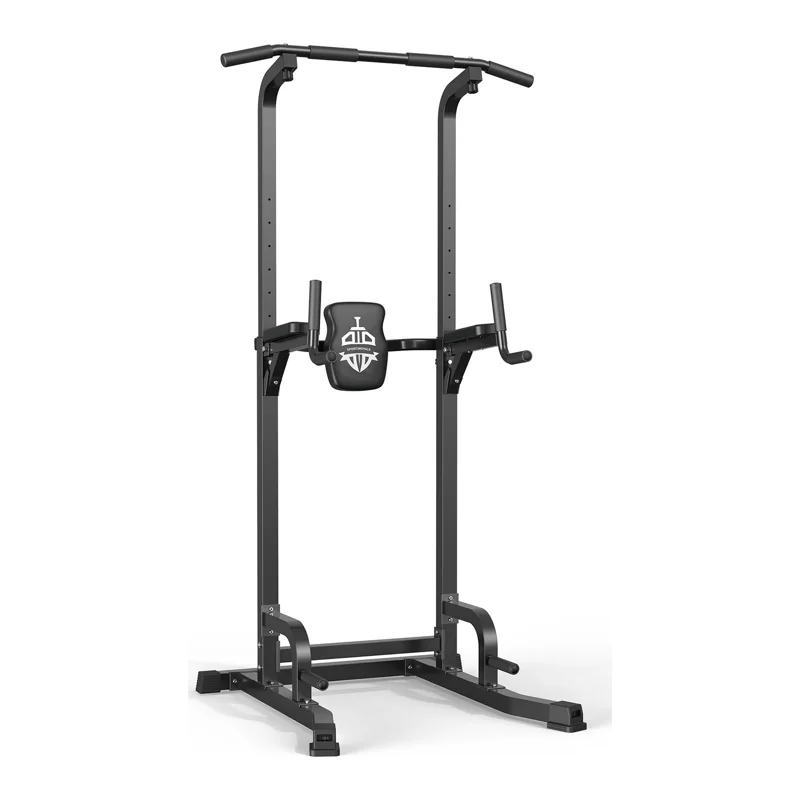
The Sportsroyals Power Tower is the one I would put in most homes, because it stays put. On my garage floor, the adjustable foot pads let me level the wide Π-shaped base before the first rep.
Strict pull-ups and long dip sets felt steady, and the thicker tubing and one-piece armrest support stopped the frame flexing where I braced. Eight bar heights and three backrest positions cover short and long arms.
The base takes more of my garage floor than the compact towers do, a trade I accepted for the steadiness. It scores highest here for durability, quality and effectiveness, and for strict reps and dips I found nothing steadier.
Specs
| Material | Alloy steel |
|---|---|
| User weight limit | 360 lb (163 kg) |
| Frame height | 83 in (211 cm) tall, 8 bar settings |
| Dip bars | Yes, with padded armrests |
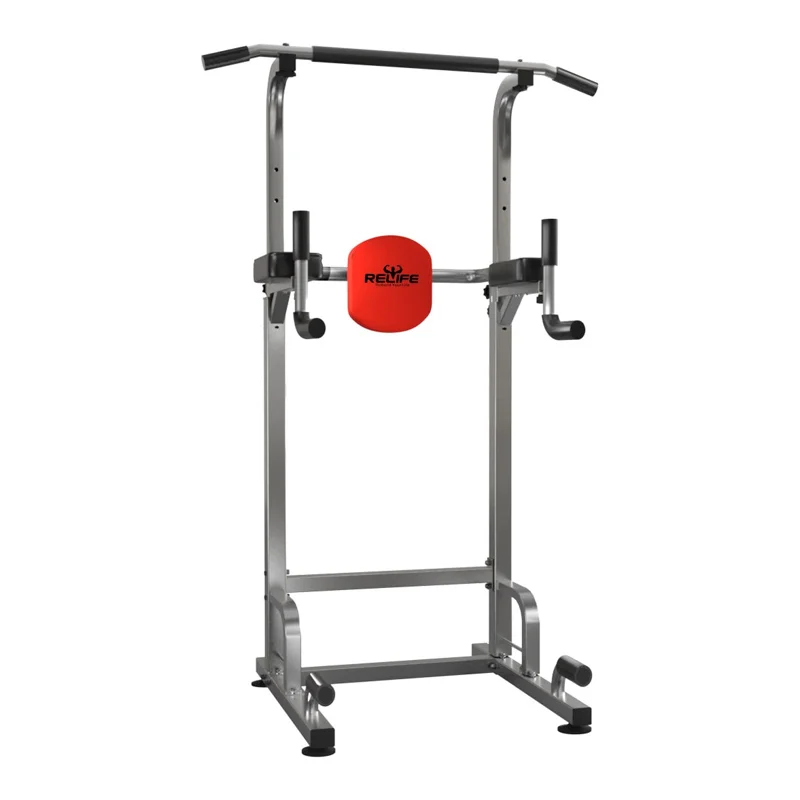
2 - RELIFE Power Tower (Best for Tall and Short Users)
Pros and Cons
Pros
- Suction cups and a locknut keep the base from creeping
- Armrests and backrest adjust for different arm lengths
- Nine bar settings suit tall and short users
Cons
- The suction cups hold best on clean, smooth floors, so dusty concrete needs wiping first
Who is it for?
Who is it for?
- Flatmates or families of different heights sharing one tower
- Heavier lifters who need a rating up to 450 lb (204 kg)
Who is it not for?
- Buyers who shop on price alone
Tall and short lifters can share the RELIFE Power Tower without anyone ducking or reaching. Its bar moves through nine settings, and the lowest suits shorter users.
On four suction cups and a safety locknut, the frame never crept across my floor. The backrest and armrests both adjust, which suited both short and long arms during dips.
Its higher user weight limit helps heavier lifters, though the pads feel firm rather than plush. On long dip sessions I missed the cushioning of the BangTong.
Specs
| Material | Alloy steel |
|---|---|
| User weight limit | 450 lb (204 kg) |
| Frame height | 86 in (218 cm) tall, 9 bar settings |
| Dip bars | Yes, with adjustable armrests |
3 - BangTong Power Tower (Best for Comfort)

Pros and Cons
Pros
- Elbow pads cushion the forearms during dips
- Foam handles stay comfortable on long sets
- Non-slip nuts keep the frame from loosening
Cons
- The lowest bar setting sits high, so shorter users may struggle to reach it
Who is it for?
Who is it for?
- Lifters who do long dip and knee raise sessions
- Anyone who wants padding at every contact point
Who is it not for?
- Short lifters who need a low starting bar
If you hate sore forearms after high-rep dips, the BangTong Power Tower earns its place. Its elbow pads and backrest take pressure off the forearms and spine.
Foam handles cushioned my grip across long sets, and the non-slip nuts stayed put through every session. Assembly tools come in the box, so I built it without hunting for a wrench.
Its bar starts high, though. I would choose it for comfort, while shorter lifters should look at the RELIFE or the SogesPower first.
Specs
| Material | Alloy steel |
|---|---|
| User weight limit | 330 lb (150 kg) |
| Frame height | 82.7 in (210 cm) tall, 6 bar settings |
| Dip bars | Yes, with elbow pads |
4 - DONIUZ Power Tower (Best Budget Pick)
Pros and Cons
Pros
- Suction cups level the base on uneven floors
- The splayed base resists tipping over
- Dip bars come included at the lowest price here
Cons
- The lowest bar setting starts at a high reach, so shorter lifters may need a step
Who is it for?
Who is it for?
- First-time buyers unsure a power tower will stick
- Students furnishing a room on a tight budget
Who is it not for?
- Anyone wanting a tower to last for years
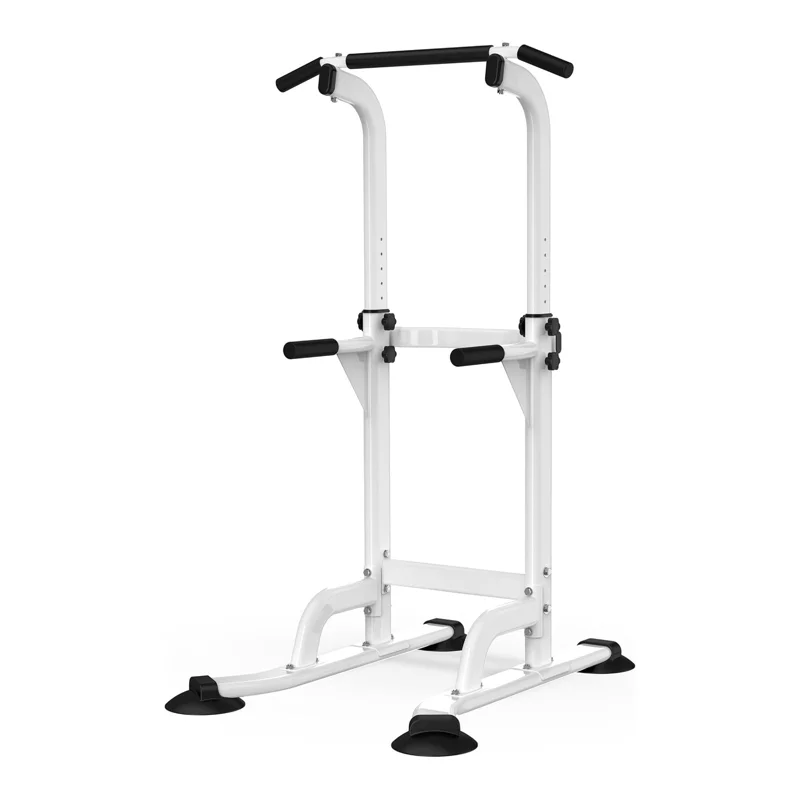
Nobody needs to spend much to learn whether a tower fits their routine, and the DONIUZ Power Tower is the cheapest way to find out.
The widened main support and splayed base resisted tipping through my strict pull-ups, and the large suction cups let the frame sit level on a slightly uneven spare-room floor.
It scores lower than the mid-priced towers for durability and quality, so treat it as a first tower rather than a forever one, and retighten the bolts after the first few sessions.
Specs
| Material | Alloy steel |
|---|---|
| User weight limit | 330 lb (150 kg) |
| Frame height | 82.7 in (210 cm) tall, 8 bar settings |
| Dip bars | Yes |
5 - Stamina Power Tower (Best with A Workout App)

Pros and Cons
Pros
- The app adds guided workouts for beginners
- Foam grips make every station comfortable to hold
- Assembly videos smooth out the first setup
Cons
- Lighter users only, so added weight on dips is off the table
Who is it for?
Who is it for?
- Beginners who want guided workouts in an app
- Lifters who like to follow video coaching
Who is it not for?
- Heavier lifters who plan to add weight
The Stamina Power Tower pairs a steel frame with the müüv app, which adds coached workouts, exercise demos and assembly videos.
The videos made my first build easier, and foam grips at each station padded my hands through a full session. Once every bolt was tight, it stood steady for strict reps.
Its user weight rating is the lowest on my list, so heavier lifters should look elsewhere. The app only earns its keep if you like following guided sessions.
Specs
| Material | Steel, foam grips |
|---|---|
| User weight limit | 250 lb (113 kg) |
| Frame height | 81 in (206 cm) assembled |
| Dip bars | Yes |
6 - CAP Barbell Power Rack (Best for Squats and Pull-ups)

Pros and Cons
Pros
- J-cup catches hold a barbell for squats and presses
- Double gusseted uprights add stability
- Built-in plate storage keeps the floor clear
Cons
- Dips need a paid attachment that bolts on later
Who is it for?
Who is it for?
- Home gym owners who squat and press as well as pull up
- Lifters who already own a barbell and plates
Who is it not for?
- Anyone who wants dips and knee raises out of the box
The CAP Barbell Power Rack turns one frame into a squat stand and a pull-up station, with J-cup catches for the barbell and built-in plate storage.
The double gusseted uprights felt solid under a squat, and the powder coat finish resisted scuffs. Dips are the gap, because the station is a separate attachment that adds to the total cost.
I treat its 300 lb (136 kg) limit as covering you and the loaded bar together, so heavy barbell work needs a lighter touch than the frame suggests.
Specs
| Material | Alloy steel |
|---|---|
| User weight limit | 300 lb (136 kg) |
| Frame height | 85 in (216 cm) assembled |
| Dip bars | Sold separately |
7 - SogesPower Power Tower (Most Height Settings)
Pros and Cons
Pros
- Ten settings let you fine-tune the bar height
- Suction cups stop the base sliding on hard floors
- The lowest setting works for teens
Cons
- Lighter tubing leaves less margin for added weight
Who is it for?
Who is it for?
- Teens and adults training in the same room
- Lifters who like to fine-tune bar height
Who is it not for?
- Lifters who rely on fast, swinging reps
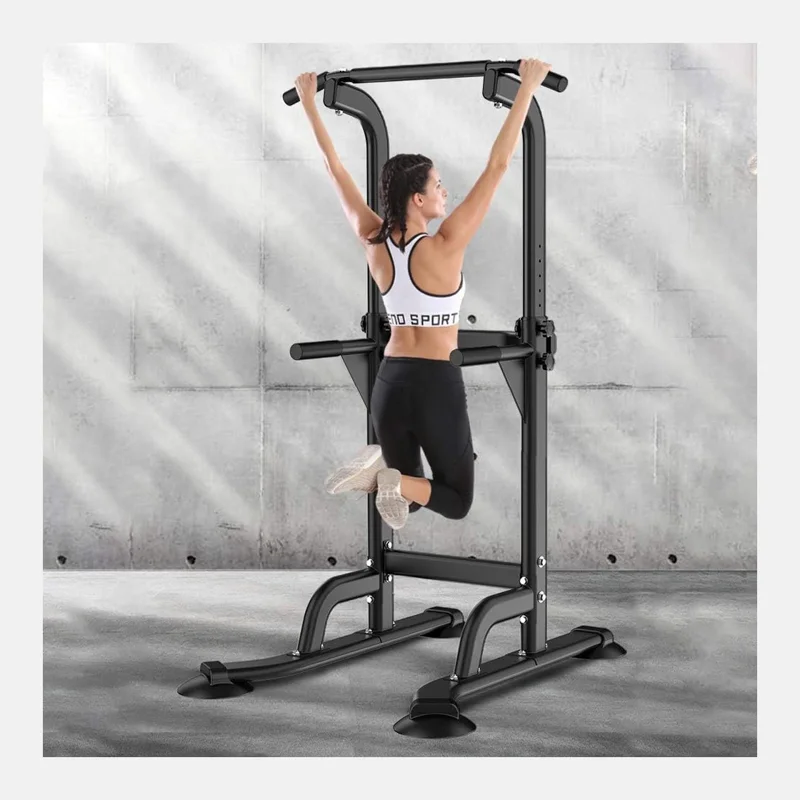
Ten height settings, the most on my list, make the SogesPower Power Tower an easy fit for rooms where several people train on one frame.
Large suction cups under the H-shaped base gripped my hard floor, and the lowest setting was easy for teens to reach. The frame is light, which helps when floor space is short and the tower has to move.
The light tubing leaves little margin, so keep added weight off it and save fast, swinging reps for sturdier frames.
Specs
| Material | Alloy steel |
|---|---|
| User weight limit | 330 lb (150 kg) |
| Frame height | 82.7 in (210 cm) tall, 10 bar settings |
| Dip bars | Yes |
8 - KiNGKANG Power Tower (Best Dual-knob Height Lock)
Pros and Cons
Pros
- Dual knobs lock the bar firmly in place
- Foam and leather pads cushion the elbows and back
- The widened H-frame resists tipping
Cons
- Six bar settings move in coarser steps than the SogesPower
Who is it for?
Who is it for?
- Users who like the bar locked at one height all session
- Heavier users who add weight to dips and pull-ups
Who is it not for?
- Lifters who want fine height steps
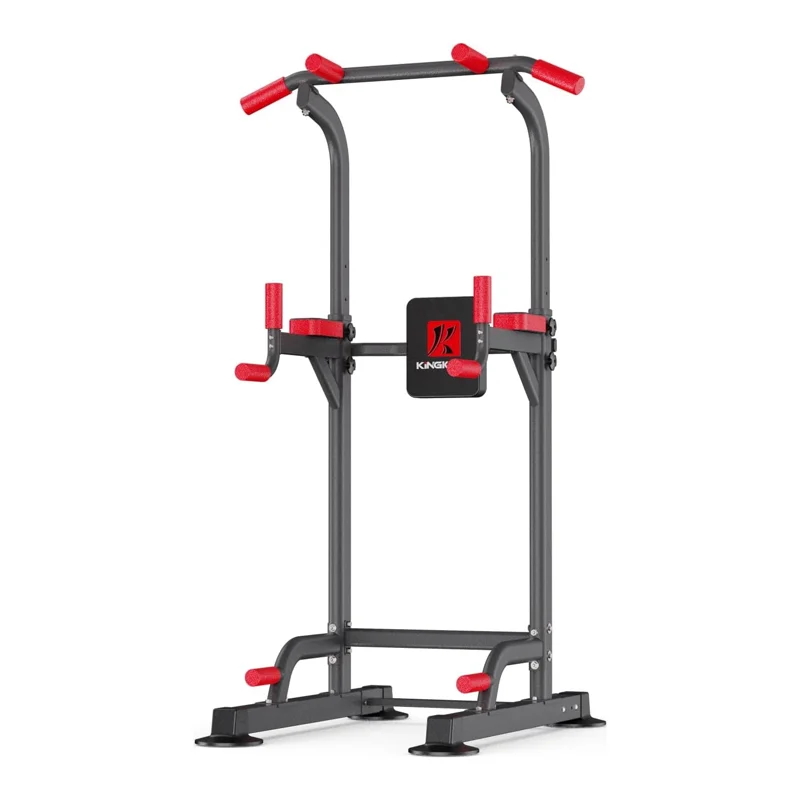
Two big knobs set the KiNGKANG Power Tower apart, because they lock the bar at the chosen height on a carbon steel frame with a widened H base.
Thick foam and leather pads cushioned my back and elbows on long dips, and the bar held its height after I locked it.
It matches the RELIFE on user weight but gives coarser height steps, so tall and short users sharing one frame are better served by the RELIFE, which also starts lower for shorter arms.
Specs
| Material | Carbon steel |
|---|---|
| User weight limit | 450 lb (204 kg) |
| Frame height | 85.4 in (217 cm) tall, 6 bar settings |
| Dip bars | Yes |
9 - Marcy Power Tower (Best Simple Tower)
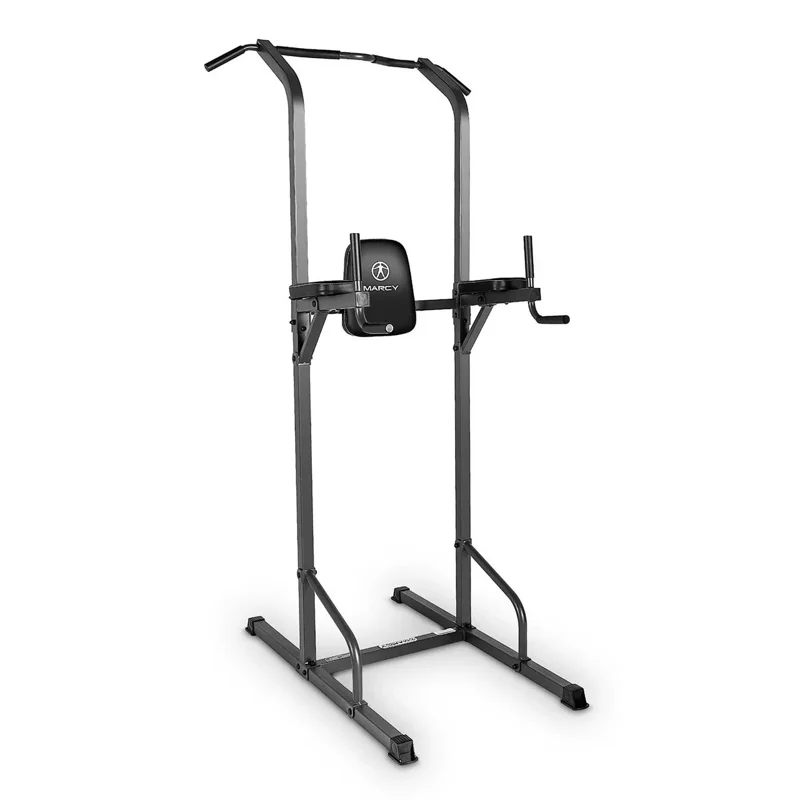
Pros and Cons
Pros
- An integrated back pad supports dips and knee raises
- Coated handles stay secure on the dip bars
- Multi-grip handles let you vary hand positions
Cons
- It stands tallest on this list, so low ceilings and basements rule it out
Who is it for?
Who is it for?
- Newcomers who only need pull-ups, dips and knee raises
- People who vary hand positions across sets
Who is it not for?
- Basement lifters with low ceilings
The Marcy Power Tower keeps things simple, with multi-grip pull-up handles, dip bars and a back pad for knee raises.
Coated handles gave me a firm hold on the dip bars even with sweaty palms, and the back pad cushioned my spine during knee raises. With no app or extras, there is nothing to learn.
It costs about the same as the Stamina and holds more weight, yet it ranks lower because it offers less than the better-reviewed towers. Check your ceiling first, because it is the tallest frame here.
Specs
| Material | Alloy steel |
|---|---|
| User weight limit | 300 lb (136 kg) |
| Frame height | 89 in (226 cm) assembled |
| Dip bars | Yes |
10 - VEVOR Pull Up Bar (Best for Wide Grips)
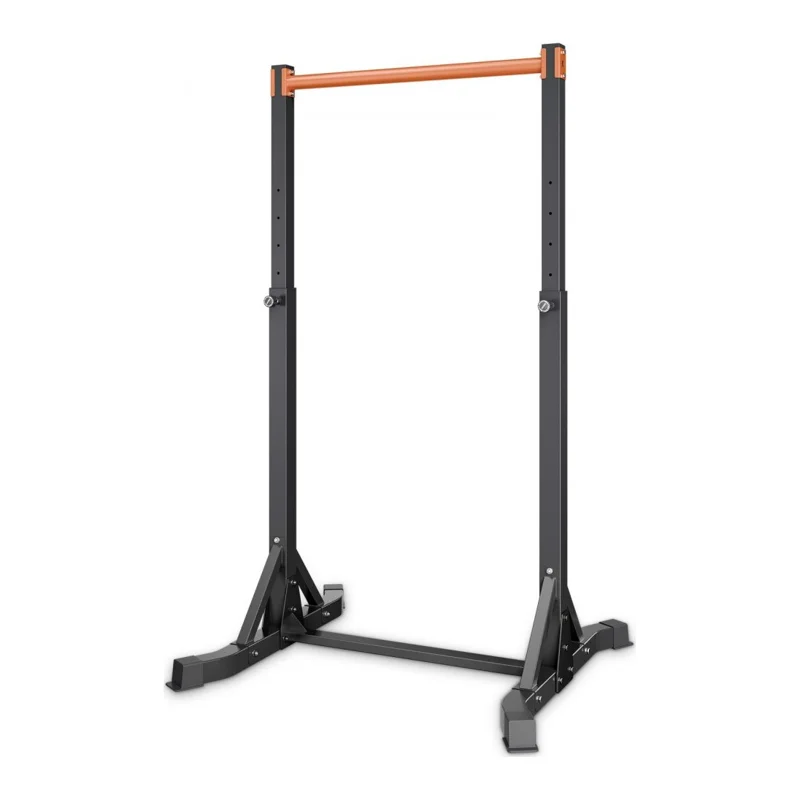
Pros and Cons
Pros
- The extra-wide frame leaves room for leg raises
- The H-shaped base resists tipping
- A rust-resistant coating protects the tubes
Cons
- No dip bars, so dips need a separate station
- The wide frame needs clear floor space around it
Who is it for?
Who is it for?
- Lifters who train wide-grip pull-ups and leg raises
- Garage trainers happy with a bare pull-up station
Who is it not for?
- Anyone who wants dips on the same frame
Wide-grip pull-ups need elbow room, and the VEVOR Pull Up Bar gives it with an extra-wide H-frame that leaves space for the arms and legs.
It has no dip bars, so it works as a lighter, simpler stand for pull-ups and leg raises rather than a full tower. A rust-resistant coating protects the tubes from garage damp.
With a triangular bracket and an H-shaped base, it felt planted through my strict reps, and the open frame left my elbows and legs plenty of clearance.
Specs
| Material | Carbon steel |
|---|---|
| User weight limit | 330 lb (150 kg) |
| Frame height | 85.8 in (218 cm) tall, 8 bar settings |
| Dip bars | No |
How did I choose these pull up bars?
I tested every bar on this list. I bought each one like any customer, built it myself and used it for strict pull-ups, chin-ups and, where the frame has dip bars, dips, noting how much it rocked and where the pads pressed.
Stability counts most, since a wobbling frame makes every other score moot. Durability, quality and effectiveness come from what I saw in use plus the steel and hardware each maker names.
User ratings track each bar's Amazon star rating. I score price from what each bar costs on Amazon today, so the cheapest tower earns the top price mark.
I left out any bar that was out of stock or sold only through a dead listing, so every pick here can be ordered today.
How do you choose a free standing pull up bar?

You choose a free standing pull up bar by working through stability, weight limit, ceiling height and extras in that order, because the first two decide whether it is safe.
1. How stable and safe is a free standing pull up bar?
A free standing pull up bar is stable and safe when it has a wide base, firm floor contact and tight bolts. Suction cups, adjustable feet and an H-shaped base all stop the frame sliding.
The lighter suction-cup towers on my list can creep or tip when you kip or swing, so keep them for strict pull-ups, chest-to-bar reps and dips. Tighten every bolt again after assembly, and use a flat, hard floor.
2. How much weight should a pull up bar hold?
A pull up bar should hold well above your body weight, because the rating is the user's weight and extra load from added plates or a vigorous rep counts against it. The towers on my list range from 250 lb (113 kg) to 450 lb (204 kg).
3. How tall does your ceiling need to be?
Your ceiling needs to be tall enough to clear the frame, with room for your head above the bar at the top of a rep. The frames here stand 81 to 89 in (206 to 226 cm), so measure before trusting a standard 8 ft (244 cm) ceiling.
4. Do you need dip bars and padding?
You need dip bars if you want to train chest and triceps on the same frame, and padding if you plan long sets. The CAP rack sells its dip station separately, and the VEVOR has none, while the other towers include them.
Is a power tower or a power rack better for pull-ups?
A power tower is better for pull-ups and dips, and a power rack is better if you also squat or bench with a barbell. A tower has no catches to hold a loaded bar.
If you want a wider spread of bodyweight gear, Best Calisthenics Equipment covers rings, parallettes and resistance bands.
FAQs
What is the safest free standing pull up bar?
The safest free standing pull up bar on my list is the Sportsroyals Power Tower, because its foot pads level the base and its thicker tubing stops flex. The RELIFE comes second with suction cups and a locknut.
What is the strongest free standing pull up bar?
The strongest free standing pull up bar is the RELIFE Power Tower, which carries 450 lb (204 kg) of user weight. The KiNGKANG matches that rating on a carbon steel frame.
Which free standing pull up bar is best for beginners and students?
The best free standing pull up bar for beginners and students is the DONIUZ Power Tower, which costs the least on my list and still holds 330 lb (150 kg). Students who want coaching can pick the Stamina for its app.
Can you move a free standing pull up bar easily?
You can move a free standing pull up bar between rooms, but it is an awkward job alone. Get a second person for the lift, and check every bolt again after the move.
Can you leave a free standing pull up bar outside?
You can leave a free standing pull up bar outside for a short time, but rain can rust the steel and sun can crack foam parts. Move it into a garage or shed after each session.
Will a free standing pull up bar damage your floor?
A free standing pull up bar will not damage most floors when it has rubber feet or suction cups, since both stop the frame sliding. Place a mat under the feet on soft wood.
My Verdict on the Best Free Standing Pull Up Bars
For one frame that handles strict pull-ups, dips and knee raises, buy the Sportsroyals Power Tower. It suits a household where several people train and nobody wants the frame moving under them.
A steady base is the one thing you cannot fix after buying, and this tower gets it from a wide footprint and thick tubing. Check that your weight sits under 360 lb (163 kg) and your ceiling clears 83 in (211 cm).
Take a look at today's price in the box below, then pick a spot with room for the wide base.
Our #1 Recommendation
Sportsroyals Power Tower (Best Overall)
Rated With Total Shape's Scoring System

- Adjustable foot pads level the base on uneven floors
- A wide back pad spreads pressure along the spine during dips
- Three backrest positions fit short and long arms
- Thousands of reviews prove the fit and finish
- The wide base takes more floor space than the compact towers
About The Author



You May Also Like