Your anchor points decide which bodyweight equipment works at home, since bars and rings need one and floor gear does not. The Rogue P-5V leads my list, and the EnterSports ab roller is the budget pick.
What is the best bodyweight exercise equipment?
The best bodyweight exercise equipment adds range, load or comfort to movements you already do, and the first row gives pulling movements a permanent home.
| # | Equipment | Rating | Trains | Setup |
|---|---|---|---|---|
| 1 | Rogue P-5V Garage Pull-Up System Best overall |
4.5 | Pull, core | Ceiling joist or wall |
| 2 | TRX All-in-One Home Gym System Best full-body trainer |
4.4 | Full body | Anchor |
| 3 | OneTwoFit Wall Mounted Pull Up Bar Best pull-up and dip station |
4.3 | Pull, dips, legs | Concrete or brick wall |
| 4 | LEEKEY Pull Up Assistance Bands Best for pull-up progress |
4.2 | Pull, dips | Loops on any bar |
| 5 | Perfect Pushup Rotating Handles Best for wrist comfort |
4.1 | Push | Floor |
| 6 | EnterSports Ab Roller Best budget pick |
4.0 | Core | Floor |
| 7 | Rubberbanditz Parallettes Best parallettes |
3.9 | Push, core | Floor |
| 8 | Double Circle Gymnastics Rings Best wooden rings |
3.8 | Pull, push, core | Beam or bar hook |
| 9 | BalanceFrom Foam Plyo Box Best for jump training |
3.7 | Legs | Floor |
| 10 | CAP Adjustable Weighted Vest Best for adding load |
3.6 | Any movement | Worn |
| 11 | BangTong&Li Power Tower Best multi-station tower |
3.5 | Pull, dips, legs | Freestanding |
What should you buy first for bodyweight training?
You should buy the Rogue P-5V first when your home has a joist, stud or concrete wall to bolt into, because a fixed bar trains pulling and hanging core work and gives the bands and the rings a place to hang.
Renters who cannot drill should start with the TRX instead. Handles or parallettes add push-ups on either route, the OneTwoFit is the alternative for a concrete wall, and the vest comes last.
The 11 best bodyweight exercise equipment (November 2026)
1 - Rogue P-5V Garage Pull-Up System (Best Overall)

Pros and Cons
Pros
- Wall or ceiling mounting fits garages with no rack
- Two bar slots let you choose the reach
- The brackets stay rigid under hard sets
- Extra bracket sets can grow it into a bigger rig later
Cons
- The mounting hardware is not in the box
Who is it for?
Who is it for?
- Garage owners who can drill into joists or studs
- Lifters who want one fixed bar to hang rings and bands from
Who is it not for?
- Renters who cannot drill into walls or ceilings
Bolted into ceiling joists, wall studs or concrete, the Rogue P-5V Garage Pull-Up System turns a garage into a fixed pull-up station that stays put through hard sets.
The bar drops into one of two slots, so I picked the longer reach for more room to move. Mounting hardware is not in the box, so lag bolts and washers join the shopping list.
A ceiling mount hangs the bar below the joists, so an 8 ft (2.4 m) ceiling leaves it under 7 ft (2.1 m) up, and tall lifters need a higher ceiling or a wall mount at the height they choose.
Specs
| Type | Ceiling or wall-mounted pull-up system |
|---|---|
| Material | 11-gauge steel brackets with a 52 in (132 cm) bar |
| Setup | Bar sits 14 or 22 in (36 or 56 cm) from the mount |
| Anchor needed | Yes, a ceiling joist, a wall stud or a concrete wall |
2 - TRX All-in-One Home Gym System (Best Full-body Trainer)

Pros and Cons
Pros
- One strap set trains pulling, pushing, legs and core
- The anchors turn a door or a sturdy beam into a gym
- The mesh travel bag lets you train on a trip
Cons
- New users face a balance challenge at first
Who is it for?
Who is it for?
- Apartment dwellers who share a living room with their training
- Lifters who want a no-weights day between heavy sessions
Who is it not for?
- Shoppers who need to spend under 100 dollars
One set of straps lets the TRX All-in-One Home Gym System train the whole body, from rows and chest presses to leg work and core holds, with no weights.
The indoor anchor hooks over a door and the outdoor one wraps a beam, so I used it in my living room and in the garden. In my testing it worked as a break from regular yoga, cardio and lifting days.
No bar or tower here trains pulling, pushing, legs and core in one purchase. More than 7,000 Amazon ratings average 4.8 stars, the highest on my list.
Specs
| Type | Suspension trainer |
|---|---|
| Material | Nylon, thermoplastic rubber and steel |
| Setup | Indoor and outdoor anchors |
| Anchor needed | Yes, a door or a sturdy beam |
3 - OneTwoFit Wall Mounted Pull Up Bar (Best Pull-up and Dip Station)

Pros and Cons
Pros
- Dip and leg-raise stations share one frame
- Padded arm and back cushions ease leg raises
- The high limit covers heavier users
Cons
- A drywall or plaster wall cannot hold it
Who is it for?
Who is it for?
- Garage and basement owners with a concrete wall
- Lifters who want pull-ups and dips in one frame
Who is it not for?
- Renters who cannot drill into walls
A fixed pull-up and dip station is what the OneTwoFit Wall Mounted Pull Up Bar gives a home gym, and it takes little floor space because it bolts to the wall.
The steel frame handles chin-ups, push-ups, dips and leg raises. In my testing the armrest cushion stayed comfortable, and the padded back support held up.
Compared with the BangTong and Li tower it costs about 60 dollars less and carries 440 lb (200 kg) against 330 lb (150 kg), which makes the wall-mounted frame the stronger buy when you have a concrete wall.
Specs
| Type | Wall-mounted pull-up and dip station |
|---|---|
| Material | Heavy-duty steel with padded cushions |
| Setup | Concrete or brick wall, not drywall |
| Anchor needed | Yes, a concrete or brick wall |
4 - LEEKEY Pull Up Assistance Bands (Best for Pull-up Progress)
Pros and Cons
Pros
- A wide resistance range suits first reps and later sets
- The carry bag and exercise guide keep the set together
- The latex-free build suits sensitive skin
Cons
- The bands need a bar or anchor to be useful
Who is it for?
Who is it for?
- Returning lifters who can hang from a bar but cannot yet pull their own weight up
- Trainees who already own a doorway bar
Who is it not for?
- Lifters who already do ten strict pull-ups
Anyone chasing a first pull-up or dip gets the most from the LEEKEY Pull Up Assistance Bands, which loop over a bar and carry part of your weight.
I looped the bands over my bar and began with the heaviest one, then stepped down to lighter bands as the reps got easier. On rest days the lightest band doubles as a shoulder and hip stretching aid.
The loops stayed on my bar between sessions without tangling, and the lightest band still helped on the last rep of each set. They only pay off once a bar is up.
Specs
| Type | Loop resistance bands |
|---|---|
| Material | Latex-free synthetic rubber |
| Setup | Loop over any bar |
| Anchor needed | Yes, a pull-up bar |
5 - Perfect Pushup Rotating Handles (Best for Wrist Comfort)

Pros and Cons
Pros
- Foam grips cushion the palms during long sets
- Smooth rotation lines up the wrists
- A printed guide pamphlet explains the exercises
Cons
- The rotating handles add a wobble that new users must learn to control
Who is it for?
Who is it for?
- Lifters with sore wrists on floor push-ups
- Trainees working on push-up form
Who is it not for?
- Advanced users who need extra range of motion
Sore wrists end a lot of push-up sets early. The Perfect Pushup Rotating Handles spin as you press, which lines the forearm up and takes pressure off the joint.
In my testing the handles reduced the pressure on my wrists and kept my focus on the right muscles.
The handles slide a little on a smooth floor unless I set them on a mat. They keep the range short, which suits lifters who are still building a base and want their wrists to settle first.
Specs
| Type | Rotating push-up handles |
|---|---|
| Material | Rubber and foam grips |
| Setup | Set on the floor |
| Anchor needed | No |
6 - EnterSports Ab Roller (Best Budget Pick)

Pros and Cons
Pros
- The low price removes the risk of trying rollouts
- The compact body fits a drawer
- Two knee pads cover the kneeling start
Cons
- The narrow wheel wobbles at the far end of a rollout
Who is it for?
Who is it for?
- Beginners who want core work on a small budget
- Home gym starters buying one piece at a time
Who is it not for?
- Advanced users who need heavy resistance
The EnterSports Ab Roller costs less than any other piece here, which makes it the first buy for core work on a tight budget.
In my testing it held up under heavy pressing. Over 18,000 Amazon ratings average 4.6 stars, so the low price comes with a long track record.
I keep it in a drawer, and the two knee pads saved me a mat on my hard floor. I still kneel carefully on the first rollouts of a session until my core warms up.
Specs
| Type | Ab wheel |
|---|---|
| Material | Stainless steel and plastic |
| Setup | Roll on the floor |
| Anchor needed | No |
7 - Rubberbanditz Parallettes (Best Parallettes)

Pros and Cons
Pros
- The wide base and non-skid feet prevent sliding
- Light weight makes them easy to carry
- Dips and L-sits open up with the added height
Cons
- The bare steel tubes turn slick when palms sweat
Who is it for?
Who is it for?
- Calisthenics beginners learning L-sits and dips
- Travelers who want a gym that packs flat
Who is it not for?
- Lifters who want padded grips for long holds
Compact and light enough to store under a bed or in a closet corner, the Rubberbanditz Parallettes lift your hands off the floor for deeper push-ups between sessions.
The solid steel tubes resist flex under body weight, and in my testing the non-skid feet kept the bars steady on the floor through every set.
The added height gives dips and L-sits a deeper range than flat handles allow. I pick them over push-up handles whenever range matters more than wrist relief.
Specs
| Type | Parallettes |
|---|---|
| Material | Steel tube |
| Setup | Set on the floor |
| Anchor needed | No |
8 - Double Circle Gymnastics Rings (Best Wooden Rings)

Pros and Cons
Pros
- Wide straps spread the load across the anchor
- The carabiners let you set the strap length
- An included book gives workout ideas
Cons
- The free-swinging rings need more control on every rep than straps do
Who is it for?
Who is it for?
- Gymnastics-style trainees with a sturdy beam
- Lifters who sweat and want a drier grip
Who is it not for?
- Beginners without a high anchor point
The Double Circle Gymnastics Rings suit lifters whose hands sweat, because the wood absorbs moisture and the grip does not slide on damp skin.
In my testing the wide straps and four carabiners went up without trouble. A free exercise book comes in the box.
I strapped them over a garage beam and spent my first sessions just holding steady. Rings ask for more skill than the TRX, so I would start there if you are new to hanging work.
Specs
| Type | Gymnastics rings |
|---|---|
| Material | Wood with metal carabiners |
| Setup | Strap to a beam or bar |
| Anchor needed | Yes, a beam or a bar |
9 - BalanceFrom Foam Plyo Box (Best for Jump Training)
Pros and Cons
Pros
- Soft foam forgives a missed landing
- The lowest side suits first box jumps
- The light body is easy to move
Cons
- Three fixed heights cap how far jumps can progress
Who is it for?
Who is it for?
- Home gym owners adding jump training
- Basketball and volleyball players training jumps at home
Who is it not for?
- Lifters who only train upper body
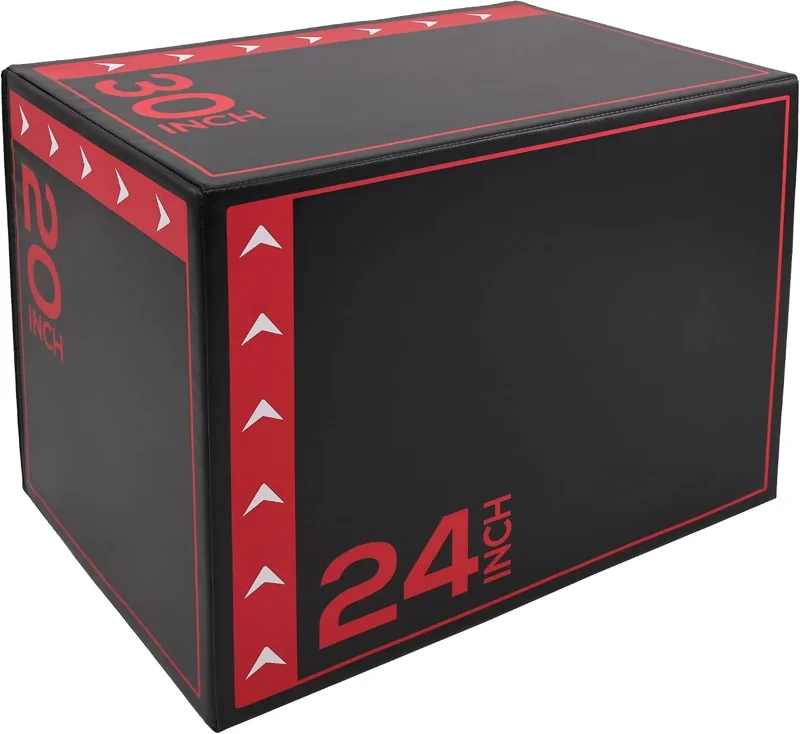
Missed landings hurt less on foam. The BalanceFrom Foam Plyo Box softens impact with high-density foam and cuts the shin scrapes that wooden boxes cause.
I flipped the box onto each side for step-ups, box jumps and quick agility drills, and a missed landing on the foam did not sting my shins.
I moved the light box with one hand between sets. It trains only the legs, so I rank it ninth, though no other piece here covers box jumps and step-ups.
Specs
| Type | 3-in-1 plyo box |
|---|---|
| Material | High-density foam |
| Setup | Floor, three heights of 16, 20 and 24 in (41, 51 and 61 cm) |
| Anchor needed | No |
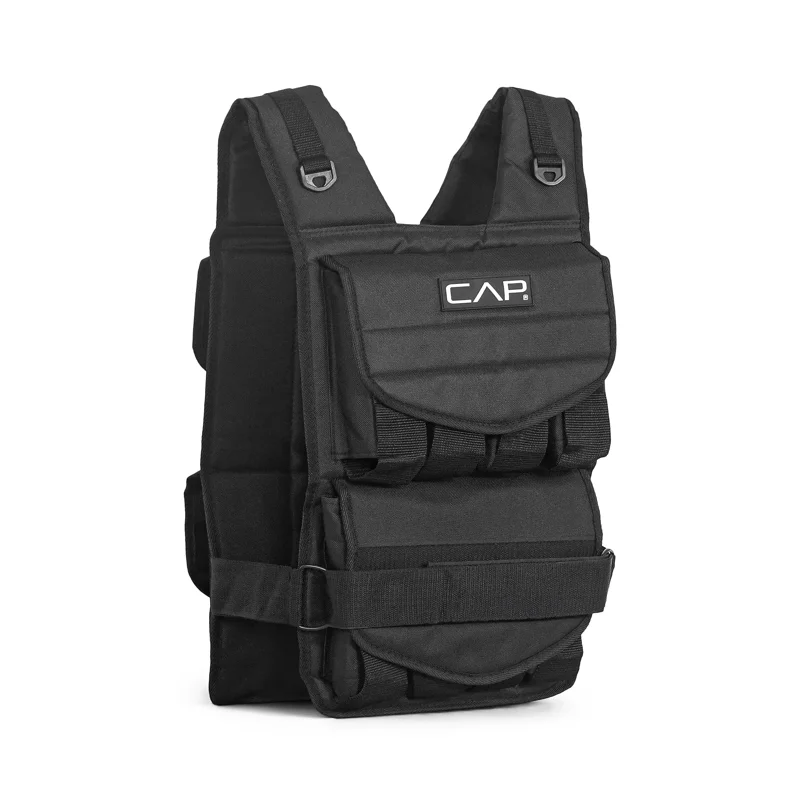
10 - CAP Adjustable Weighted Vest (Best for Adding Load)
Pros and Cons
Pros
- One-pound steps allow gradual progress
- The belt holds the load still during dips and push-ups
- The vest works with every other piece here
Cons
- The load tops out at a level strong lifters outgrow
Who is it for?
Who is it for?
- Trainees who can already do twenty push-ups
- Trainees who want more load on dips and rows
Who is it not for?
- Beginners still learning movement form
Add load to push-ups, pull-ups and dips with the CAP Adjustable Weighted Vest once bodyweight reps feel easy, with no bench or rack needed.
I added packets a few at a time as push-ups and dips got easier. The waist belt closed the fit around my torso so the load rode snug through every rep.
I wear it for dips and push-ups only, and take it off between sets so my shoulders recover. Buy it after you master the basics and want more challenge from the same moves.
Specs
| Type | Weighted vest, adjustable to 20 lb (9 kg) |
|---|---|
| Material | Neoprene and mesh with steel packets |
| Setup | Worn with a waist belt |
| Anchor needed | No |
11 - BangTong&Li Power Tower (Best Multi-station Tower)

Pros and Cons
Pros
- One frame stands in for a doorway bar, dip bars and a captain's chair
- Up to four stations share one floor footprint
- Height adjustment fits taller and shorter users
Cons
- The backrest is small for taller users
- The footprint eats into a small room
Who is it for?
Who is it for?
- Renters who want a pull-up station without drilling
- Owners with a spare corner for a tower
Who is it not for?
- Apartment dwellers with low ceilings
The BangTong&Li Power Tower suits people who cannot drill into a wall, because it stands on the floor and still gives them a pull-up station.
Two auxiliary rods on the base and non-slip end caps keep it stable during dips. In my testing the thick elbow padding made leg raises comfortable.
It takes a floor corner and a tall ceiling, which a small room or a low basement rarely offers. The OneTwoFit beats it on all five scores, so it ranks last.
Specs
| Type | Freestanding power tower |
|---|---|
| Material | Alloy steel with padded rests |
| Setup | Assembly with a height adjustment |
| Anchor needed | No, it stands on the floor |
How did I choose this bodyweight equipment?
I picked equipment that trains pulling, pushing, core, legs or progression, then scored each piece on five measures that matter for gear you train with at home.
I used each piece in home sessions and scored how well it holds up, how well it is made and how well it trains the movement it is built for. The headline rating is the plain mean of the five scores.
The star score on each store supplies the user rating and the current price on that store sets the price score, so the cheapest piece earns the highest Price score.
How do you choose bodyweight equipment for a home gym?
Choosing bodyweight equipment for a home gym starts with the space and the movements you want, and four checks cover the rest. They are ceiling height, equipment type, budget and durability.
1. How much ceiling space do you need?
You need ceiling space taller than the gear and the lifter hanging from it. The Rogue P-5V drops its bar 14 or 22 in (36 or 56 cm) below a ceiling mount, so tall lifters need a ceiling above 8 ft (2.4 m) or a wall mount.
The BangTong&Li stands 82.7 in (210 cm) tall, so a low basement suits floor gear or a wall-mounted bar better.
2. Which equipment type covers which movement?
Each equipment type covers a different movement and needs a different anchor. Straps and rings train pulling and pushing from a beam, bars and towers train pull-ups and dips from a ceiling, wall or floor, and bands assist pull-ups on a bar.
3. How much should you spend?
You should spend where your training gap is largest, and the Rogue P-5V at 150 dollars buys the pulling base while the TRX at 189.95 dollars covers the most movements.
The ab roller, the bands and the push-up handles cost 14.99, 24.99 and 39.99 dollars and fill single gaps.
4. How durable does bodyweight gear need to be?
Bodyweight gear needs to be durable enough to carry your body weight, because dips and leg raises load a frame hard. The OneTwoFit holds 440 lb (200 kg) of user weight, and the BangTong&Li and Rubberbanditz hold 330 lb (150 kg).
The Rogue P-5V uses 11-gauge steel brackets that Rogue guarantees against failure when properly installed.
FAQs
Are home bodyweight workouts effective?
Home bodyweight workouts are effective for building muscle and endurance, and extra resistance from bands, a vest or a harder variation keeps progress going once the basics feel easy.
Can you get ripped with just bodyweight exercises?
You can get ripped with just bodyweight exercises, because the work builds muscle and burns calories at the same time. Visible definition also needs a diet that keeps body fat low.
Is it OK to do bodyweight exercises every day?
It is fine to do light bodyweight exercises every day, but hard sessions for the same muscles need rest between them. Rotating pushing, pulling and leg days keeps each muscle group recovering.
Can you train with bodyweight equipment in a small apartment?
You can train with bodyweight equipment in a small apartment if you pick floor-based gear. Bands, handles, an ab roller and a door-anchored strap set take almost no room.
My Verdict on the Best Bodyweight Exercise Equipment
Buy the Rogue P-5V Garage Pull-Up System if you can drill into a joist, stud or concrete wall and want one fixed bar for pulling. The EnterSports Ab Roller is the budget start.
Renters who cannot drill should look at the TRX All-in-One Home Gym System, which anchors over a door and trains the whole body.
Our #1 Recommendation
Rogue P-5V Garage Pull-Up System (Best Overall)
Rated With Total Shape's Scoring System

- Wall or ceiling mounting fits garages with no rack
- Two bar slots let you choose the reach
- The brackets stay rigid under hard sets
- Extra bracket sets can grow it into a bigger rig later
- Get the BEST PRICE until the end of November
- The mounting hardware is not in the box
About The Author


You May Also Like