Best known for his devastating knockout power, Deontay Wilder aka Bronze Bomber is a fighter to reckon with in the boxing ring. His 97.72% knockout-to-win percentage ratio speaks for itself.
After reviewing interviews, training footage, and insights from Wilder's coaching team, our team compiled this comprehensive breakdown of his training regimen, which is known for its diversity and innovation.
Imagine the typical heavyweight boxer's workout—grind, heavy lifts, grueling cardio, and endless bag work. You will soon see that Wilder's actual approach is nothing like that. Here are the guy's training secrets.
Quick Summary
- Deontay Wilder’s workout consists of agility drills, plyometric exercises, pool workouts, and heavy weight training.
- The Bronze Bomber has an easy approach to his diet plans. Although it includes lots of protein, he also takes pancakes and sausages.
- The heavyweight champion takes two protein shakes before noon every day. But we also think that he might be into pre-workout supplements.
Bronze Bomber Stats
- Age: 40 years
- Height: 6’6’’-6’7’’
- Weight: 231 lbs
- Waist: 34”
- Chest: 42”
Workout Routine
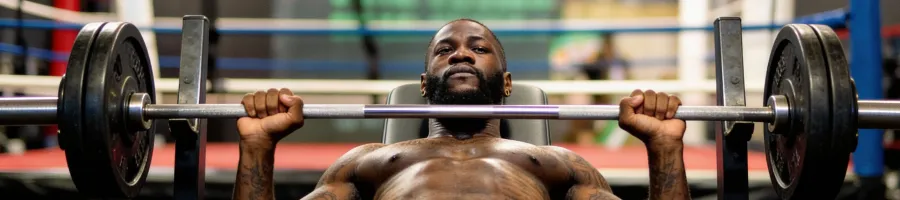
Wilder follows a six-day workout routine with help from his personal sports trainer, Don House. His regimen emphasizes practicing hitting with force and precision.
Monday
Cone Agility Drill: Placing two cones 3 ft apart from each other and moving laterally around them.
Form Run Drill:
- Foot-Over-Ankle Movement
- Foot to Shin
- Foot Over Knee
Wilder does 3 sets of 4 reps, each with a minute of rest between each rep.
Cool Down/Abs Finishers: these help Wilder strengthen his core [1]:
- Crunches
- Situps
- Russian Twist
- Reverse Crunch
- Woodchopper
- Standing on one leg to improve balance and leg stability
Strong legs are vital for agility and hitting force, supporting Wilder's explosive movements in the ring, whatever the round.
Tuesday
Deontay Wilder’s training shifts to pool-based workouts on Tuesdays.
These include:
- Water running or aqua jogging
- Deep water running
- Swimming
- Water resistance exercises
- Low-impact cardio activities
“I love the water because it builds all your muscles in your body,”
— D. Wilder
Wednesday
Rest day
Thursday

On Thursdays, Bronze Bomber adds some weights to his regimen.
Plyometric Hops: 2 sets and 2 reps each:
- Single Leg Hop
- Double Leg Hop
- Forward Hop
- Sideways Hop
Cone Agility Drill: Same workout as Monday
Weight Training: 4 sets for each of these:
- 8 reps of deep back squats
- 8 reps of deadlift
- 10 reps of dumbbell reverse lunge
- 12 reps of leg extension
- Dumbbell single-leg calf raise
- 10 reps of single leg leg press
- 10 reps of single leg hip extension
Friday
Deontay Wilder's training on Friday includes the weight room, but he starts with sand pit plyometric moves.
They include:
- Squat Jump
- Jumping Lunge
- Leg Hop
- Pause Squat
- High Knee
Weight training exercises:
- Clean Pull
- Dumbbell One-Arm Row
- Lunge Position Dumbbell Shoulder Press
- Dumbbell Bent Over Row
- Dumbbell Incline Press
- Dumbbell Arm Curl
- Dumbbell Front Lateral Raise
Saturday
Light pool or boxing workout in the gym, that may include some sparring, jump rope, and hitting mitts.
Sunday
Kayaking or water-based activities with his buddies.
Workout Principles

Most of Wilder’s workouts focus on improving his agility, explosiveness, and coordination, including speed bag training. This intense conditioning and strength training are key factors in how Wilder has knocked down many opponents in the ring.
While he may not be in the gym every other day, he also incorporates heavy bag workouts and uses his recovery days with fun activities such as kayaking and swimming.
Deontay Wilder’s Diet Plan
His diet plan depends on his fight schedule, but he generally consumes about 6,000 to 8,000 calories daily. How's that for an appetite? Let’s examine this wild nutrition program in detail.
"We don't worry about weight. We don't even use the scale at the gym. As long as he's training hard and eating right, that's what matters."
— Jay Deas, Trainer
1st meal: Breakfast (8 am)
- Pancakes
- Sausages (including patty sausage and polish sausage) or maybe tuna
- Two boiled eggs / good egg McMuffins
- Cheese (as a topping or side)
- Protein shake (more on this later)
2nd meal: Lunch (11.30 am)
- Corn on the cob
- Alfredo chicken pasta
- Garlic bread
- Protein shake
3rd meal: Mid-Afternoon (2 pm)
- Two boiled eggs
- Sandwich with cheese and maybe ham
4th meal: Dinner (5 pm)
- Mashed potatoes or yam
- Salisbury steak
- Green beans
5th meal: Dinner (7:30 pm)
- Red potatoes
- T-bone steak
- Green beans
- Squash
Diet / Nutrition Principles

Bronze Bomber basically eats whatever stuff they put on his table.
“They just feed me the food; I just eat it! My stomach sometimes can be so fat that I have to rub it for hours. I’m not a big eater!”
— D. Wilder
However unusual his diet plan may seem, here are a couple of takeaways:
- Wilder eats an early dinner. Studies have shown that this can boost lipid metabolism [2].
- Almost all his meals incorporate protein. This includes eggs, green beans, and a protein drink to top it off.
Supplements
Wilder drinks two protein shakes before it's even noon.
While he may not have mentioned it, we also think he takes a pre-workout to get to the right mental state before a workout.
FAQs
How does Deontay Wilder train?
Deontay Wilder trains using a structured six-day program that incorporates conditioning, agility drills, plyometrics, weight training, and pool workouts. This regimen emphasizes explosiveness, coordination, and active recovery through water-based exercises.
What gym did Deontay Wilder go to?
Deontay Wilder trained at Skyy Boxing Gym in Northport/Tuscaloosa, Alabama. He also built a custom home training facility near his Alabama mansion.
How much does Deontay Wilder bench press?
Deontay Wilder can bench press over 350 pounds, which he celebrated on social media as a personal best.
How many hours a day do boxers train?
Professional boxers typically train two to four hours daily. Training duration depends on their fight schedule and current training phase.
Train Like Deontay Wilder
It takes a lot of discipline and commitment to exercise almost every day and stick to a routine like Deontay Wilder's training.
While you can commit yourself every day and still achieve great results even if you’re not a boxer, adding a pre-workout supplement to the mix can help get you into the right mentality for training.
We’ve tested a vast number of supplements and have included the top ones with the best test data results and the most positive feedback from clients.
About The Author

You May Also Like