A bodybuilding app does one of three jobs, which are logging your sets, supplying a program or choosing your next weight, and the job you hand over decides the pick. Boostcamp leads my list and Hevy is the budget pick.
Free tiers, Android support and Apple Watch logging separate ten apps that otherwise look alike, so the choice comes down to how much planning you want done for you.
What is the best bodybuilding app?
The best bodybuilding app logs every set quickly and also tells you what to train next, and Boostcamp does both with a free tracker and program library.
| # | App | Rating | Monthly price | Watch app |
|---|---|---|---|---|
| 1 | Boostcamp Best overall |
4.7 | Free, Pro $14.99 | None |
| 2 | Hevy Best budget pick |
4.6 | Free, Pro $2.99 | Apple Watch |
| 3 | Alpha Progression Best for automatic weight targets |
4.5 | Free, Pro $12.99 | None |
| 4 | Strong Best minimalist logger |
4.4 | Free, PRO $4.99 | Apple Watch |
| 5 | JEFIT Best exercise library |
4.3 | Free, Elite $12.99 | Apple Watch |
| 6 | Fitbod Best for generated sessions |
4.2 | $12.99 after trial | Apple Watch |
| 7 | MacroFactor Workouts Best for MacroFactor diet users |
4.1 | $11.99 after trial | None |
| 8 | Gymverse Best for tracking body measurements |
4.0 | $19.99 | Apple Watch |
| 9 | Gymaholic Best for 3D exercise animations |
3.9 | $3.99 after trial | Apple Watch |
| 10 | RP Hypertrophy Best for muscle-group focus |
3.8 | $34.99 | None |
The 10 best bodybuilding apps (November 2026)
1 - Boostcamp (Best Overall)
Pros and Cons
Pros
- More than 10,000 store ratings back its 4.9 score
- Free tier lets you run a full split before paying a cent
- Plans from named coaches remove guesswork over set and rep schemes
- Pro-only extras stay optional because logging and programs cost nothing
Cons
- No watch app, so every set goes in on the phone
Who is it for?
Who is it for?
- Intermediate lifters tired of maintaining spreadsheets
- Beginners who want a ready-made hypertrophy split
Who is it not for?
- Lifters who log from an Apple Watch
I rank Boostcamp first because it hands a bodybuilder a named split on day one and logs every set against it. Its library holds programs such as PHUL, PHAT and Eric Helms' intermediate bodybuilding plan.
A short questionnaire was enough for the AI coach to build me a multi-week program. The rest timer on my lock screen kept the phone out of the way between sets, and RPE and RIR logging added no extra taps.
Pro adds the Strength Score and a volume heatmap that shows which muscle group gets the fewest sets. I ran my split without Pro and only missed the heatmap when I wanted to rebalance a week.
Specs
| Platforms | iPhone and Android |
|---|---|
| Free tier | Tracker and program library free, Pro $14.99 a month or $59.99 a year |
| Watch app | None |
2 - Hevy (Best Budget Pick)

Pros and Cons
Pros
- Free tier includes the full exercise library
- A lifetime Pro purchase exists for $74.99
- Pro costs less than any other paid tier here
Cons
- Free users hit a routine limit when rotating several splits
Who is it for?
Who is it for?
- Lifters who train with friends and compare numbers
- Students who want a no-cost logger
Who is it not for?
- Lifters who expect the app to write their program
Hevy earns the budget pick because logging a workout in it costs nothing and shows no ads. Free use includes the full workout log, the exercise library and a feed for sharing sessions.
The phone stayed in the locker because the Apple Watch app logged my sets from the wrist. A friend followed the session in the feed, and Pro costs $2.99 a month.
Boostcamp outranks it because Hevy leaves program design to you unless you buy Hevy Trainer. Building my first split meant adding exercises one at a time.
Specs
| Platforms | iPhone, Android and Apple Watch |
|---|---|
| Free tier | Free logging with no ads, Pro $2.99 a month or $23.99 a year |
| Watch app | Apple Watch |
3 - Alpha Progression (Best for Automatic Weight Targets)
Pros and Cons
Pros
- Set-by-set targets remove guesswork from progression
- A 14-day trial on the yearly plan lets you test Pro before paying
- Deload weeks in Pro schedule a lighter week before fatigue stalls your lifts
Cons
- Planning features sit behind Pro and the app has no watch version
Who is it for?
Who is it for?
- Hypertrophy trainees who stall on progressive overload
- Privacy-minded lifters who skip account sign-ups
Who is it not for?
- Lifters who prefer to pick their own weights
Every set in Alpha Progression comes with a target weight. The app builds a plan around the equipment in your gym and then sets those targets.
Free use covers unlimited logging with exercise videos and your own plans, and I started my first plan without making an account. Pro adds the plan generator and periodization.
Setup took longer than in Hevy because the app asks about my gym equipment and goals before the first set. Boostcamp hands over a free program with far fewer questions.
Specs
| Platforms | iPhone and Android |
|---|---|
| Free tier | Unlimited logging and own plans, Pro $12.99 a month or $79.99 a year |
| Watch app | None |
4 - Strong (Best Minimalist Logger)
Pros and Cons
Pros
- Timed exercises record holds such as planks beside weighted lifts
- Assisted bodyweight exercises log pull-ups and dips with a counterweight
- Superset support suits bodybuilding splits
Cons
- Free routines run out quickly when you rotate splits
Who is it for?
Who is it for?
- Experienced lifters who already follow a split
- Apple Watch wearers who log from the wrist
Who is it not for?
- Beginners who need a program handed to them
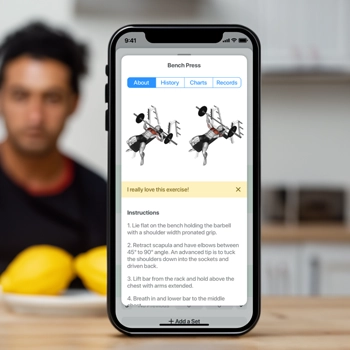
Two taps log a set in Strong, which centers on set logging and records weight, reps and supersets.
Logging from my wrist felt quick, and PRO at $4.99 a month is the upgrade that lifts the routine cap. Setting up a four-day split took one session of copying exercises across days.
There is no program or weight advice, so I chose every next load myself. That suited a split I already knew and wanted tracked without any prompts getting in the way.
Specs
| Platforms | iPhone, Android and Apple Watch |
|---|---|
| Free tier | Limited routines, PRO $4.99 a month or $29.99 a year |
| Watch app | Apple Watch |
5 - JEFIT (Best Exercise Library)
Pros and Cons
Pros
- Video clips help you fix form before heavy sets
- Built-in bodybuilding programs save planning time
- Elite analytics reveal volume trends
Cons
- Busy screens slow a quick set log
Who is it for?
Who is it for?
- Visual learners checking technique before each lift
- Gym newcomers who want a program and videos together
Who is it not for?
- Minimalists who dislike feature-heavy screens
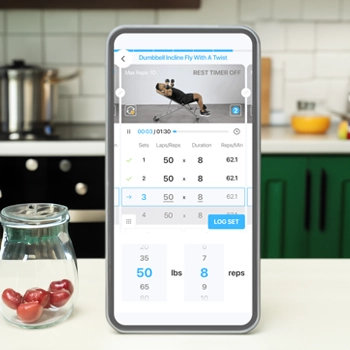
JEFIT holds more than 1,400 exercises with HD clips and animations, which suits lifters who learn from video.
I was impressed that the exercise videos stayed open to free users when I evaluated it. Built-in bodybuilding programs, supersets and an Apple Watch sync round out the free app.
The screens felt busier than Strong's when I only wanted to log a set. Elite costs $12.99 a month against $4.99 for Strong PRO, so I rank JEFIT fifth even though its free videos help newcomers.
Specs
| Platforms | iPhone, Android and Apple Watch |
|---|---|
| Free tier | Free with videos and programs, Elite $12.99 a month or $69.99 a year |
| Watch app | Apple Watch |
6 - Fitbod (Best for Generated Sessions)
Pros and Cons
Pros
- Equipment filters adapt sessions to home or gym
- Muscle-group balancing varies exercises across the week
- Android and watch versions cover most setups
Cons
- Every session changes, so repeating last week's workout exactly takes extra effort
Who is it for?
Who is it for?
- Travelers who change gyms and equipment often
- Lifters who dislike planning sessions ahead
Who is it not for?
- Followers of a fixed program like 5/3/1
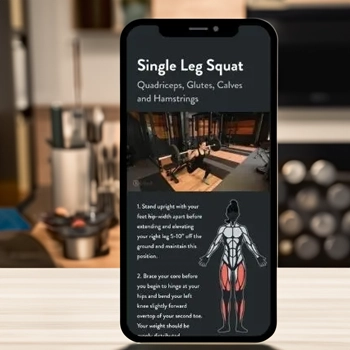
A fresh session waits each time you walk into the gym with Fitbod. It builds the workout from your goals and your equipment.
I swapped exercises to fit a crowded rack, and the app took those edits into the next session. The Apple Watch app and the Strava link kept my data in one place.
Generated sessions do not follow a published split, so lifters on 5/3/1 or PHUL should look at Boostcamp. After the free trial Fitbod costs $12.99 a month on the App Store.
Specs
| Platforms | iPhone, Android and Apple Watch |
|---|---|
| Free tier | Free trial, then $12.99 a month or $79.99 a year |
| Watch app | Apple Watch |
7 - MacroFactor Workouts (Best for MacroFactor Diet Users)
Pros and Cons
Pros
- Plans adjust as your strength changes
- Gym profiles keep home and commercial setups apart
- Each exercise has a technique video, so form checks stay in the app
Cons
- No watch logging, so every set goes in on the phone
Who is it for?
Who is it for?
- MacroFactor diet users who want training in the same ecosystem
- Lifters who switch between a home gym and a commercial gym
Who is it not for?
- Students who need a free logger
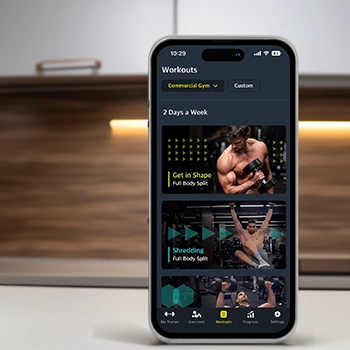
Training that adjusts as your lifts change is what MacroFactor Workouts sells. It builds routines around your goals, experience and available equipment.
Technique videos by Jeff Nippard explained each lift, and gym profiles let me switch between a home setup and a commercial gym. There is no free tier, only a seven-day trial.
The app has no watch version, so I logged every set on the phone. At $11.99 a month it fits lifters who already use MacroFactor for nutrition, and Hevy and Boostcamp cost less to try.
Specs
| Platforms | iPhone and Android |
|---|---|
| Free tier | No free tier, 7-day trial, then $11.99 a month or $71.99 a year |
| Watch app | None |
8 - Gymverse (Best for Tracking Body Measurements)
Pros and Cons
Pros
- Plans adjust weights and reps automatically
- Progress photos track size changes alongside strength
- Hands-free Apple Watch training keeps sets moving
Cons
- Plan adjustments only work with Premium
Who is it for?
Who is it for?
- General gym-goers building muscle with no program yet
- Lifters who track body measurements with their lifts
Who is it not for?
- Bodybuilders who follow a specific named split
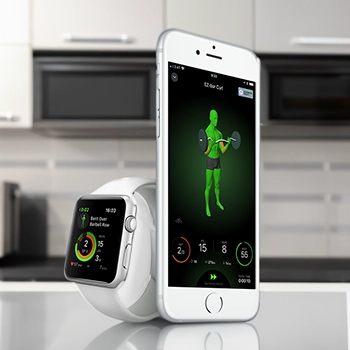
A multi-week plan arrives ready to follow in Gymverse. It sets weights, sets and reps for you and adjusts them as you progress.
Multi-angle videos showed me each lift step by step before I loaded the bar. Logging body measurements and progress photos beside each lift let me see size changes next to strength.
With the Apple Watch app my sets moved along between exercises and the phone stayed on the bench. Premium costs $19.99 a month, more than any other planner here except RP Hypertrophy.
Specs
| Platforms | iPhone, Android and Apple Watch |
|---|---|
| Free tier | Free to download, Premium $19.99 a month or $119.99 a year |
| Watch app | Apple Watch |
9 - Gymaholic (Best for 3D Exercise Animations)
Pros and Cons
Pros
- Heart rate and calories record on the wrist without extra taps
- Animations show which muscles each lift works
- Pre-made programs give a starting split
Cons
- Free use ends after the seven-day trial
Who is it for?
Who is it for?
- Apple Watch owners who train with the phone in the locker
- Beginners who need to see how each lift moves
Who is it not for?
- Lifters who never wear a watch and want deep program choice
The phone can stay in your bag because Gymaholic logs a whole workout from the Apple Watch. The Watch app starts, tracks and logs sessions.
I found the 3D exercise animations made complex lifts easier to follow. Pre-made programs give you a split to start with.
Wrist logging worked best with simple sets. The watch app carried the whole session without the phone, and after the seven-day trial Premium costs $3.99 a month, the lowest paid price here after Hevy.
Specs
| Platforms | iPhone, iPad and Apple Watch |
|---|---|
| Free tier | 7-day free trial, then $3.99 a month or $31.99 a year |
| Watch app | Apple Watch |
10 - RP Hypertrophy (Best for Muscle-group Focus)
Pros and Cons
Pros
- Body-part specialization plans target weak areas
- The meso builder lets you plan your own blocks
- Progression advice arrives with every block
Cons
- No watch app, so every set goes in on the phone
- Weekly adjustments depend on pump and soreness ratings after each session
Who is it for?
Who is it for?
- Advanced trainees chasing specific muscle groups
- Fans of Dr. Israetel's training approach
Who is it not for?
- Casual lifters who only want to log sets
Hypertrophy coach Mike Israetel designs the training in RP Hypertrophy, which offers more than 45 premade plans including body-part specialization.
The meso builder let me plan upper body, lower body or single muscle groups, and the app adjusted weekly progression targets from my pump, soreness and workload feedback.
It is the best pure hypertrophy and auto-regulation tool here, so bodybuilders with budget to spare should look at it first. At $34.99 a month with a 4.4 store rating it still lands last in a ranking that weighs price and ratings.
Specs
| Platforms | iPhone and Android |
|---|---|
| Free tier | Free to download, subscription $34.99 a month or $299.99 a year |
| Watch app | None |
How did I choose these bodybuilding apps?
I chose these bodybuilding apps by logging real sessions in each one and comparing how fast I could enter a set, how good the programs were, how the watch sync behaved and what the free tier let me do.
Durability means how reliably an app keeps your log. Price follows the monthly cost of the paid tier each card is about, so an app whose main job is free scores highest, and user ratings equal the App Store score rounded to one decimal.
Quality and effectiveness reflect the features I used in my sessions and how much each one helped me train the next set.
How do you choose a bodybuilding app?
You choose a bodybuilding app by deciding who should do the planning, then checking price and platform. The answer changes which of the ten fits.
1. Which type of app do you need?
The type of app you need depends on who plans your sets. A logger such as Hevy or Strong suits a fixed split and Boostcamp brings ready programs, while Alpha Progression and Fitbod pick your weights for you.
Pick the type first, because the three jobs overlap less than the feature lists suggest.
2. Do you need a free app or a paid one?
You need a paid app only when you want the plan built for you, because the free tiers of Hevy, Boostcamp and Alpha Progression already cover logging.
The cheapest paid tiers are Hevy Pro and Gymaholic at under 4 dollars a month, and the table shows the rest. MacroFactor Workouts has no free tier at all.
3. Does the app fit your phone and watch?
The app fits your phone and watch when it runs on both. Each card's Platforms row shows the phones and watches the app supports, and the table's Watch column shows the watch apps.
Do bodybuilding apps check your form?
None of these ten bodybuilding apps checks your form on camera, because they offer exercise videos and animations rather than analysis of your own lifts.
Use JEFIT, Gymaholic or Alpha Progression for technique videos, and film your own sets if you want a coach to review them.
FAQs

Is a free bodybuilding app enough?
A free bodybuilding app is enough when you follow a program you already have. The paid tiers mainly add planning and analytics.
Which bodybuilding app supports 5/3/1?
The bodybuilding app that supports 5/3/1 is Boostcamp, which keeps the template in its program library. Hevy also lets you follow any program or split that you enter yourself.
Which bodybuilding app works with Apple Watch?
Hevy, Strong, JEFIT, Fitbod, Gymaholic and Gymverse work with Apple Watch. Boostcamp, Alpha Progression, MacroFactor Workouts and RP Hypertrophy have no watch app.
What is the best JEFIT alternative?
The best JEFIT alternative is Hevy if you want a free log and Boostcamp if you want ready-made programs. Both start free.
My Verdict on the Best Bodybuilding Apps
Pick the app that does the planning you do not want to do. Boostcamp is my overall choice for lifters who want a ready-made split.
Choose Hevy to log for free and Alpha Progression when you want the app to set your weights.
Our #1 Recommendation
Boostcamp (Best Overall)
Rated With Total Shape's Scoring System

- More than 10,000 store ratings back its 4.9 score
- Free tier lets you run a full split before paying a cent
- Plans from named coaches remove guesswork over set and rep schemes
- Pro-only extras stay optional because logging and programs cost nothing
- No watch app, so every set goes in on the phone
About The Author



You May Also Like